
Companies in the Southlands are looking to the future with optimism – but a skilled labor shortage is a challenge.
Companies in the South Coast region are generally positive about their current operations and future prospects. Just over a third of companies expect to increase their staff in the next twelve months, and nearly half anticipate increased investment. At the same time, many companies say they are looking for employees with specific education or skills.
This is stated in the findings. Regional Association's 2025 Corporate Survey. In total, there are answers from 82 companies in the South Coast in the survey's database.
Here The survey can be viewed in more detail in the sss.is data marketplace.
Just over a third expect to increase their staff
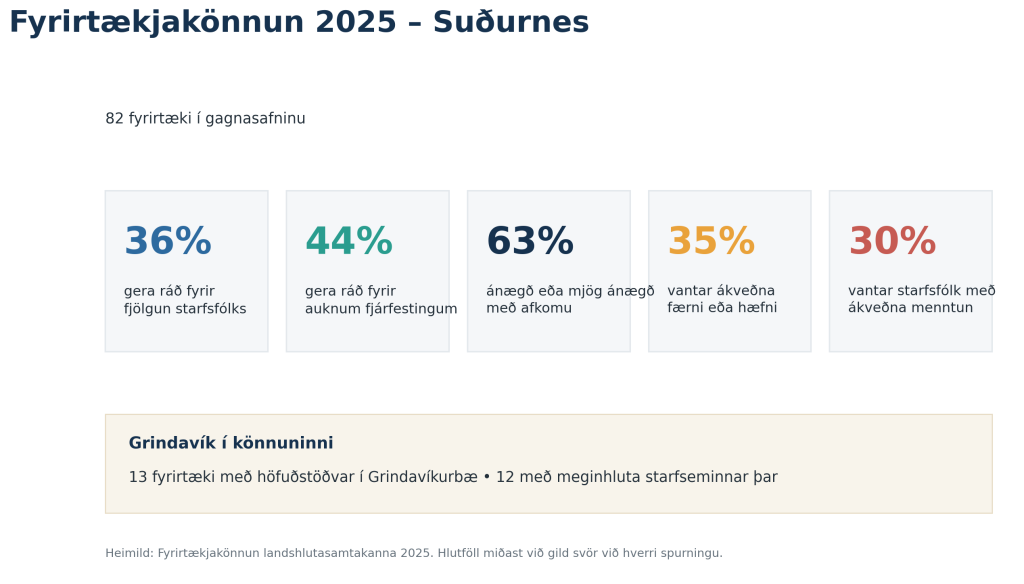
Of the companies in the South-West that took a position on the development of their workforce, do 36% plans to increase staff in the next twelve months. Most of them anticipate a moderate increase, but one company believes that its staff will increase significantly.
Just under half, or 49%, however, believes that the number of employees will remain unchanged and 15% to expect a decrease.
When the regions are compared, the percentage of companies expecting to increase their staff is highest in the South-West. For comparison, the percentage is about 33% in the capital region, 31% in East Iceland, and 30% in Westfjords.
Need for educated and qualified staff
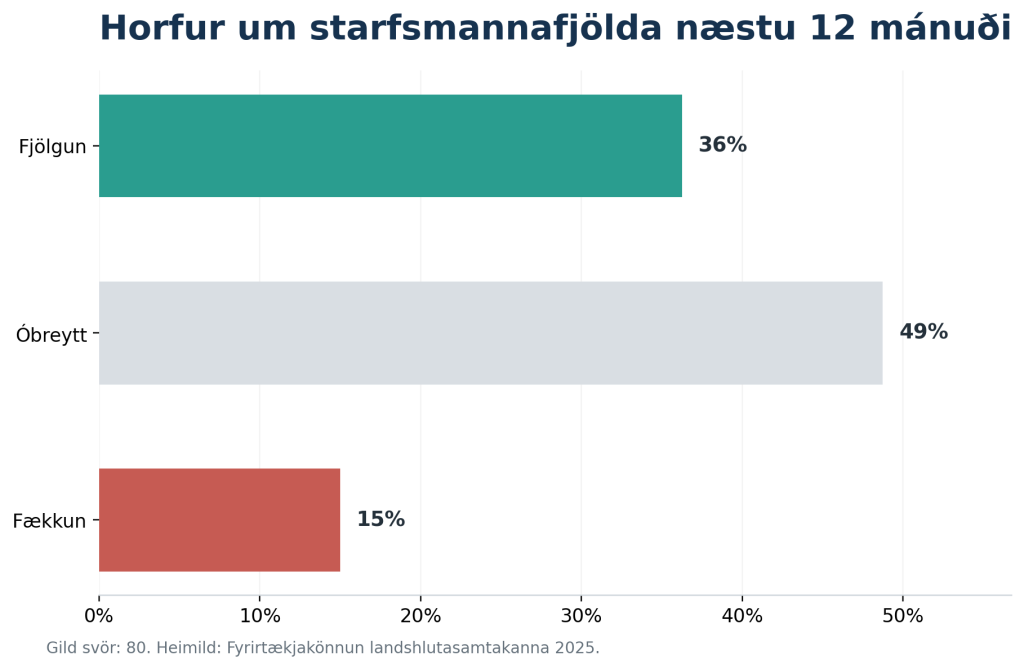
Human resources are prominent in the results. About 30% companies in the Southlands say they are looking for staff with a specific education. and even more, or 35%, say that they need staff with specific skills, abilities, or competencies outside the formal education system.
Among the education that the companies specifically mention is Vocational education prominent. Also, among other things, people with education in culinary arts, information technology, aviation maintenance, engineering, and various specialized fields are in demand.
When asked about skills outside the formal education system, a wide range of needs are identified, including work experience, practical skills, language proficiency, communication skills, marketing, information technology, and various specialized professional skills.
The skills gap appears to be particularly pronounced in the South-West. The proportion of companies that say they lack such skills is 35% in the Southlands, compared to about 32% in the East, 28% in the Westfjords, and 24% in the capital region.
Majority pleased with the outcome
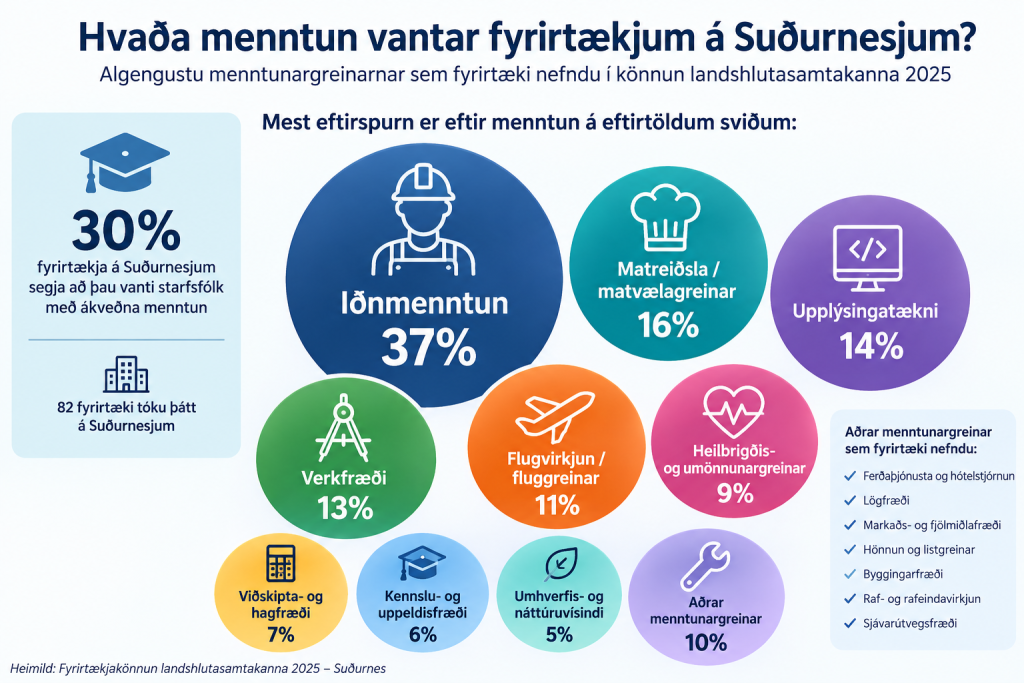
The companies' outlook for recent years is also positive. About 631 companies in the South Coast region say they are satisfied or very satisfied with their company's performance over the past five years., or the time the company has been in operation, if it is shorter.
About 17% are neither satisfied nor dissatisfied, but about 17% are dissatisfied or very dissatisfied. A very small number of companies did not take a position.
The percentage of satisfied businesses in the Suðurnes is among the highest measured among regions and is similar to that of Vesturland.
Strong investment plans
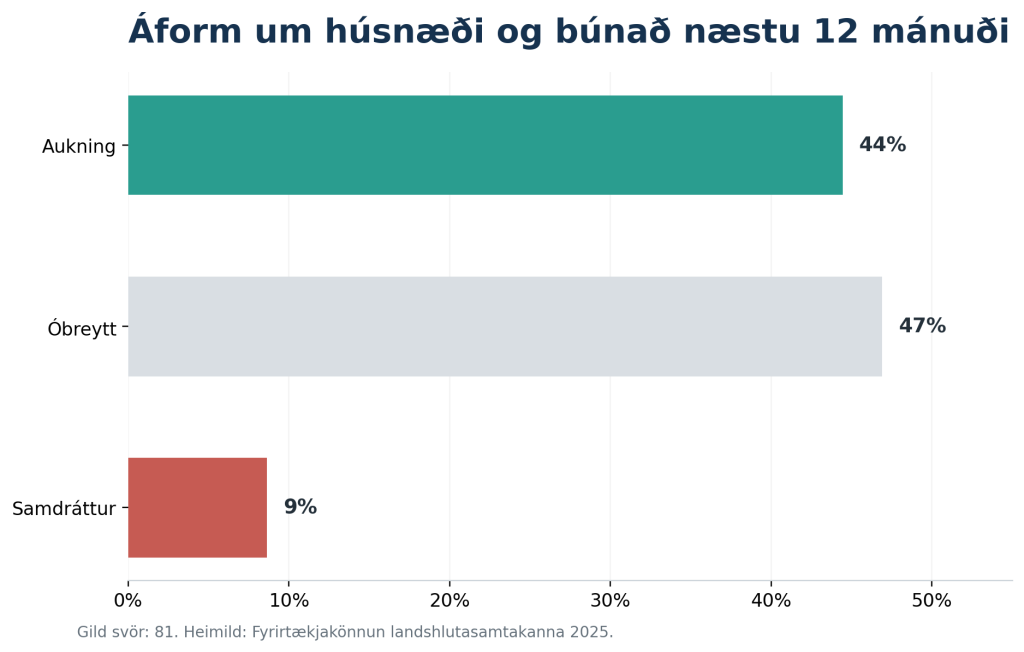
The results also indicate a significant willingness to invest. About 441 companies in the South-West region expect to add operational premises and/or equipment in the next twelve months.
Of these, 38% anticipate some increase and 6% a significant increase. However, about 47% foresee an unchanged investment volume, and nearly 9% anticipate a decrease.
The South Coast stands out here. The percentage of companies with plans for increased investment is highest in the Southwestern regions of the country, about 44%, compared to 40% in North West Iceland, 39% in East Iceland, and 37% in South Iceland.
Tourism and construction are bulky
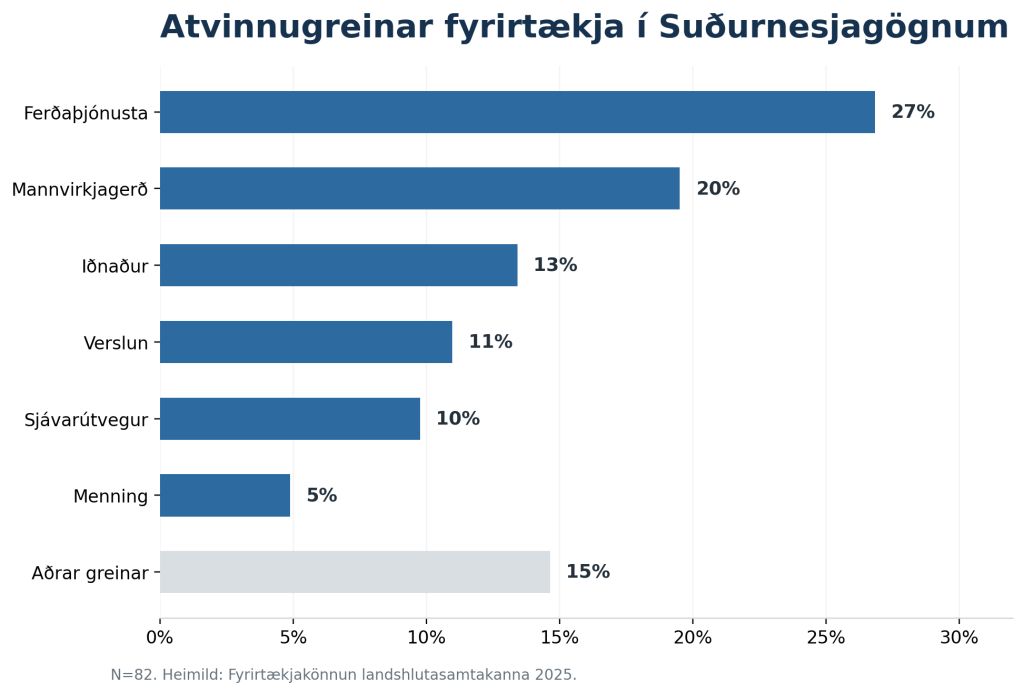
The composition of respondents partially reflects the unique nature of the business community in the Southlands. Tourism is the largest single sector of industry., with 22 companies out of 82, or about 27% of respondents. This is followed by construction with 16 companies, industry with 11, retail with nine, and fisheries with eight.
The companies are of all sizes. About 32% of respondents have fewer than five employees, while about 20% have 50 employees or more. However, most companies fall into the middle size categories: 25 companies have 10–49 employees and 15 have 5–9 employees.
Grindavík's unique position is reflected in the survey
The special circumstances in Grindavík need to be considered when interpreting the results for the South Coast. Companies from Grindavík were not excluded from the survey, despite significant changes in employment and living conditions due to seismic activity and volcanic eruptions.
Of the 82 companies in the Southlands in the survey, 13 with headquarters registered in Grindavíkurbær and 12 say Grindavík is the municipality where they work or have the majority of their operations..
The data also indicate a shift in operations. There are examples of companies headquartered in Grindavík that have the majority of their operations in Reykjanesbær or Suðurnesjabær. Therefore, comparisons between municipalities must be made with caution, as the location of headquarters and the actual operations of companies in Grindavík do not always align with these extraordinary circumstances.
Positive outlook, but human resources are key
Overall, the results paint a somewhat positive picture of the business life of the South Coast. Companies in the area are more likely than companies in other parts of the country to plan for staff increases, and plans for increased investment are also prominent. The majority of companies are satisfied with their performance in recent years.
On the other hand, the demand for human capital is clear. Three out of every ten companies are looking for staff with specific education, and more than a third are looking for certain skills or competencies. Access to qualified personnel will therefore remain a key challenge for the business community in the South Coast region, alongside continued growth and investment.